
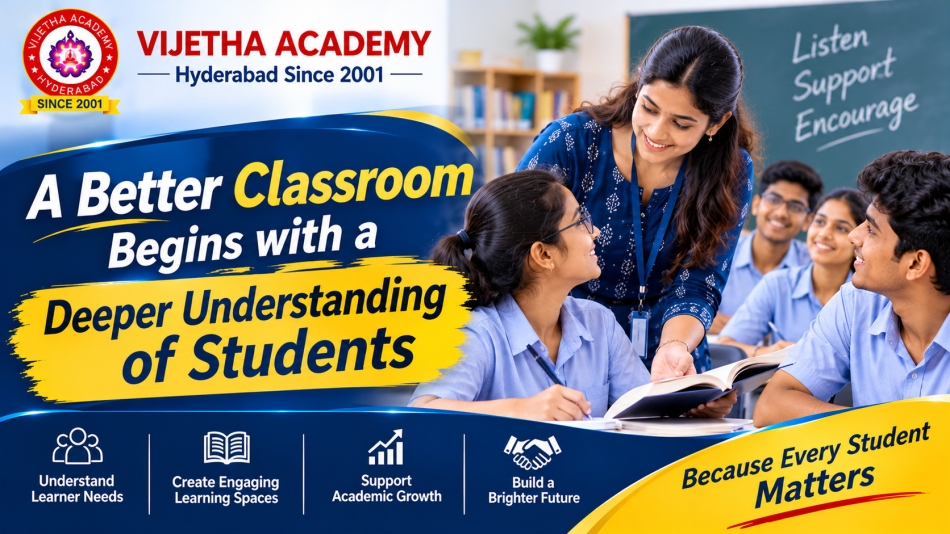
Teaching is not just about teaching lessons and finishing a syllabus. Students in each class will have a variety of interests, learning speeds, abilities, and thinking styles. A good teacher is aware of these differences and makes sense of how to help all learners make progress. Bed Degree Distance Learning In Hyderabad may be a significant step in the academic journey.
But the role of an effective teacher is not just about learning something: the subject matter. It takes patience, observation, communication, creativity and ability to respond to situations that may occur when interacting with others in the classroom during the normal course of events. These skills are worthy of consideration if considering a career in education.
Suppose there are students in a class who have grasped a lesson the first time through and others who require further examples. Some like to work as part of a group; others feel more comfortable working independently. It is the responsibility of a teacher to identify these differences and not assume that all students learn in the same way.
Knowing students learning behavior aids teachers in making better classroom decisions. They can give explanations on complex issues using familiar examples, pose questions to students and offer further assistance if needed. Furthermore, by observing student participation, it can help to determine if there is a better approach to teaching.
This kind of view alters the definition of a teacher. Instead of just providing information teachers are engaged in learning.
A good lesson doesn't always start with an explanation. It can start with a thoughtful question sometimes.
A teacher might, for instance, show students a scientific concept and ask them to report on how they have observed this concept in everyday life. Likewise, a mathematics class can be made more engaging by matching computations with shopping or travel or home activities.
Questions stimulate independent thinking. They also assist teachers in determining whether students have grasped the topic or not, and for clarification purposes. Thus, the key to creating a clear and pertinent question is an essential component of professional teaching practice.
Teachers in training can appreciate being able to investigate teaching practices, educational principles and classroom communication in a structured manner as part of a teacher education program.
It is easier for students to learn a subject when they can relate it to events they are familiar with. For example, when you teach a geography lesson, you could discuss the weather in the area, the local surroundings, or the changes in the environment. Similarly, storytelling, speaking and writing exercises can be part of the language learning process.
Such links deepen the relevance of learning as pupils can see that their classroom learning relates to their world.
Another factor that teachers need to take into account is the resources available to them. Explanations can be aided by pictures, simple demonstrations, classroom discussions and digital learning materials. But the goal should never be lost sight of: to make the lesson more understandable for students, not just because it's technically possible.
No two classes are the same. A teacher can have students with varying confidence, language skills, interests, and educational backgrounds. For this reason, classroom management needs to be thoughtfully decided and not a one-size-fits-all solution.
For example, a student who does not do well in larger tasks may need to be encouraged by using smaller tasks. If another student finishes tasks fast, he/she might need more challenging tasks. Likewise, cooperative group discussions can lead students to learn to cooperate and respect other perspectives.
Teachers are reminded to have good observational and communication skills in these situations. They should be familiar with the classroom setting, remain under control, and set up ways for all of the students to engage.
Students should be aware of their academic goals and thoroughly review the program information before enrolling in Bed Degree Distance Learning In Hyderabad. The eligibility requirements, university recognition, course content, examination systems, practical requirements, and allowed course of study should all be taken into account.
It is crucial to check and make sure whether the particular Bed program and its delivery mode is approved by relevant authorities for admission session. Students are advised to read and refer to the official information from the University and the applicable regulatory requirements as well as promotional information.
The academic program should be appropriate to the learner's ability and career aspirations. The clarity of information during this stage can help students make a confident decision about their education.
A good teacher keeps on learning beyond qualification. Teaching approaches evolve, pupil expectations grow, and digital resources are used in the classroom. Thus, teachers must continue to be curious, reflect on teaching practices and draw lessons from actual teaching experiences.
Vijetha Academy can help students navigate their academic career by providing them with information on the educational options available and what to consider before choosing a path. The idea is to support the learner in order to prepare them for the next step in their education.
When considering Bed Degree Distance Learning In Hyderabad, don't only consider the course name but think about what kind of teacher you want to be. Emphasize the acquisition of knowledge, communication and practical understanding that will facilitate meaningful learning.
1. What is the main purpose of a B.Ed degree?
A Bachelor of Education program develops knowledge of teaching methods, educational principles, student learning, classroom practices, and the responsibilities of educators.
2. Who can apply for a B.Ed program?
Eligibility depends on the university and applicable regulations. Applicants generally need a recognised undergraduate or postgraduate qualification and must meet the prescribed admission conditions.
3. What skills are useful for becoming a good teacher?
Communication, patience, subject knowledge, classroom management, observation, creativity, and the ability to understand different learning needs are valuable teaching skills.
4. What should students check before choosing a distance B.Ed program?
Students should verify university recognition, program approval, eligibility, study arrangements, practical training requirements, examinations, and the validity of the distance learning mode.
5. Can a B.Ed qualification support a teaching career?
A recognized Bed qualification can support entry into eligible teaching roles, subject to the recruitment rules, additional qualifications, and eligibility requirements of the relevant institution or authority.
Teaching can influence how students understand themselves, approach challenges, and view the world. If you want to build your knowledge of education, explore the available program details and make an informed academic choice. Contact Vijetha Academy for guidance on Bed Degree Distance Learning In Hyderabad and take a considered step towards your educational goals.